History of the Wado-Kaichin Coin
The wado-kaichin coin was minted in 708 and is Japan's oldest coin.

In 1961, local resident Seiko Takamura found a wado-kaichin silver coin in a canal running alongside the Suematsu Temple Sites. The wado-kaichin coin was minted in 708, and in August 709, all silver coins were destroyed. The coin found by Takamura had an outer diameter of 24.4 mm, an inner diameter of 6.9 mm, and a thickness of 1.4 mm.
Wado-kaichin (和同開珎) is Japan's oldest coin, minted in 708 by order of Empress Genmei and long considered the first type of coin produced in Japan.

Etymology
The name wad-kaichin derives from the Japanese pronunciation of the four characters in the coin's inscription: wa-d'-kai-chin.
The first two characters literally mean harmony (wa) and 'together' (d). The third character means 'openness' (kai), with an additional meaning of 'beginning'. The fourth character, which is somewhat unusual, means 'rare, precious'. Together, the third and fourth characters can mean 'first currency'.

Why did old Japanese coins have a square hole in the middle?
The origin of the square hole in the centre of round coins can be traced back to the semi-tael coin issued in the 3rd century BC by Qin Shi Huang, the first emperor of the Chinese Qin dynasty. In China, the square and the circle represent heaven and earth, and the coin, combining the two shapes, was considered lucky.
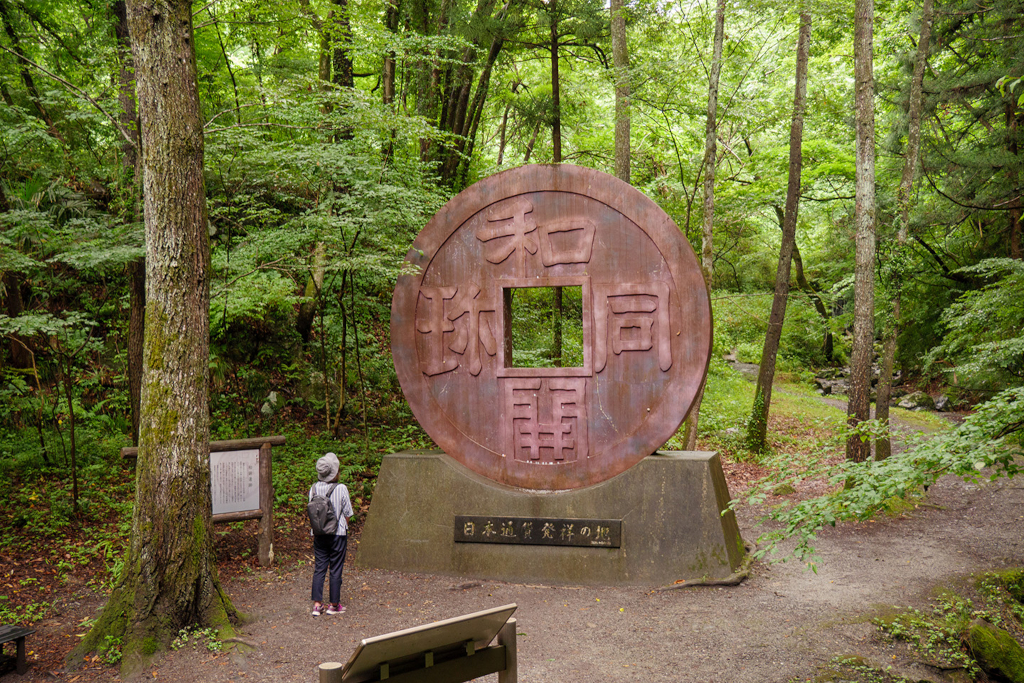
Wado Hijiri Shrine and copper mine today
The old Wado mine in Chichibu Kuroya was built in 708 AD and is now a historic site.

Wado Hijiri Shrine is a beautiful mountain shrine with a large wooden monument of a wado kaichin and two stone guardian dogs (komainu) outside.
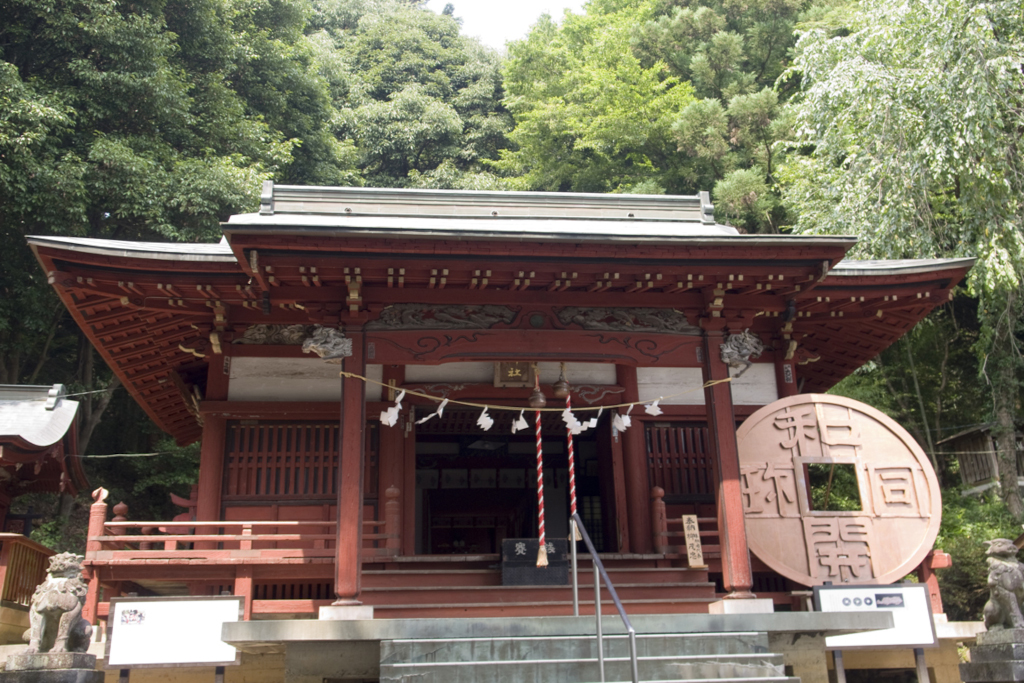
The gods of money are worshipped at this shrine. Those who visit this shrine, especially gamblers, leave written prayers and offerings as requests for 'a miracle'.

Directly opposite the monument is a description of the coin and a replica of Empress Genmei's copper coin pair and a piece of copper.

To the right of the monument there is a river where you can wash coins, just as miners used to wash copper after extraction, and it is said that if you offer them to the shrine, you will receive monetary fortune in return. Today, Kuroya is once again a rural area, pleasant for a walk through the forests and rice fields.