
Yokohama
The renowned Ferris Wheel, Chinatown, Minato Mirai, museums, the tower, and much more make Yokohama fascinating.

Yokohama (横浜) is Japan's second-largest city, and toward the end of the Edo period, Yokohama's port was one of the first to be opened to foreign trade. As a result, Yokohama quickly grew from a small fishing village to one of Japan's major commercial cities.
Yokohama is well-known for having the world's largest Chinatown and retains some former Western residences in the Yamate district.
Strolling around Yokohama
Sankeien Garden
Sankeien Garden (三溪園) is a large Japanese-style garden featuring numerous historic buildings from all over Japan. Ponds, small rivers, flowers, and beautiful paths create a Kyoto-like atmosphere, but in reality, we're in Yokohama.


The garden was built by Hara Sankei and opened to the public in 1904. Among the historic buildings are an elegant daimyo residence, several teahouses with an adjoining main hall, and the three-story pagoda of the old Tomyoji temple in Kyoto.
Minato Mirai 21
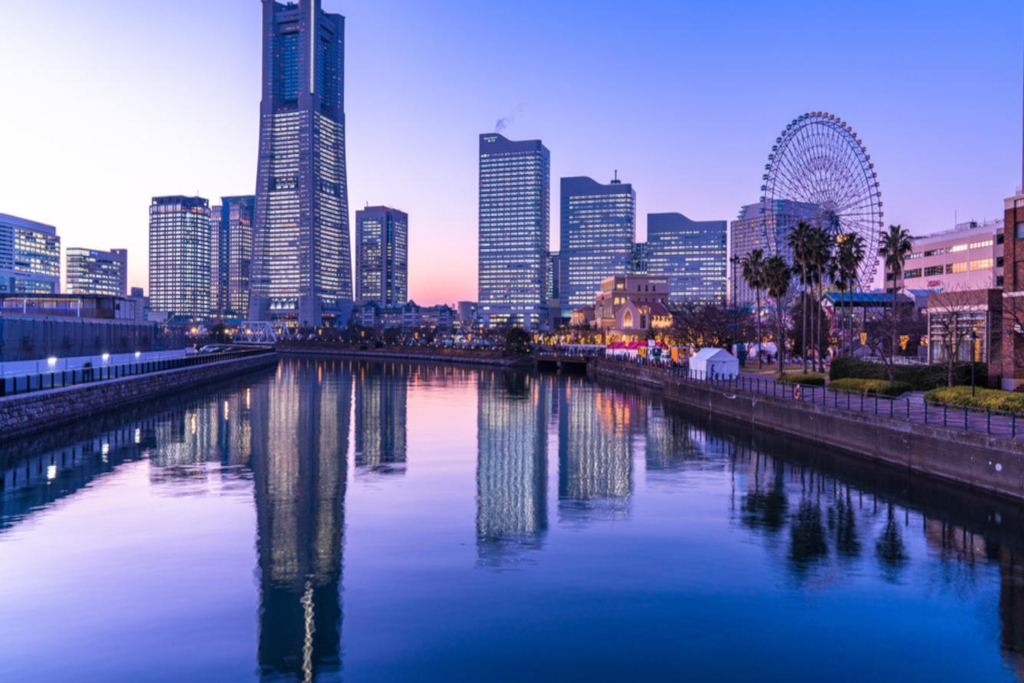
Minato Mirai 21 (みなとみらい 21) is a seaside urban area in central Yokohama whose name means "port of the future." This area is home to large skyscrapers, including Japan's tallest, the 296-meter-high Landmark Tower. The area was a large shipyard until the 1980s, when development began to transform it into a new city center.

Adjacent to the Landmark Tower are the three Queen's Towers, each a little shorter than the next, followed by the Yokohama Bay Hotel Tokyu and the Pacifico Convention Center, one of the largest in Japan, which includes the rounded Intercontinental Hotel.
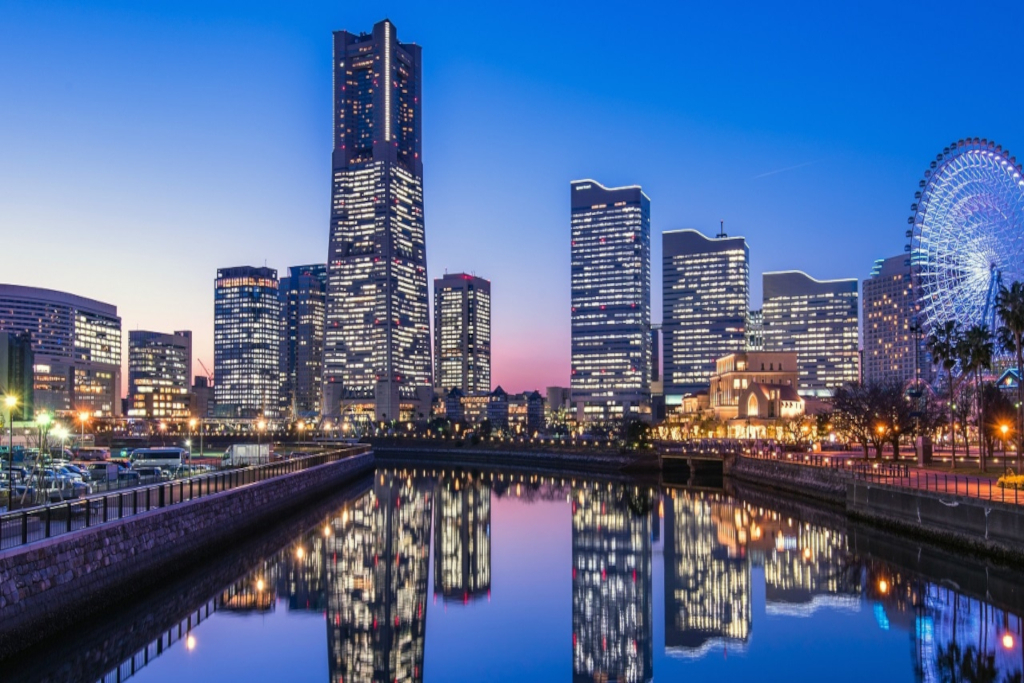
Queen's Towers

Yokohama Bay Hotel Tokyu
Connected to the Chuo district is a large artificial island that makes up the Minato Mirai Shinko district where you can find rides for adults and children.
When you think of Yokohama, the famous Cosmo World Ferris wheel immediately comes to mind, which also functions as a clock and was for a time the largest clock in the world.
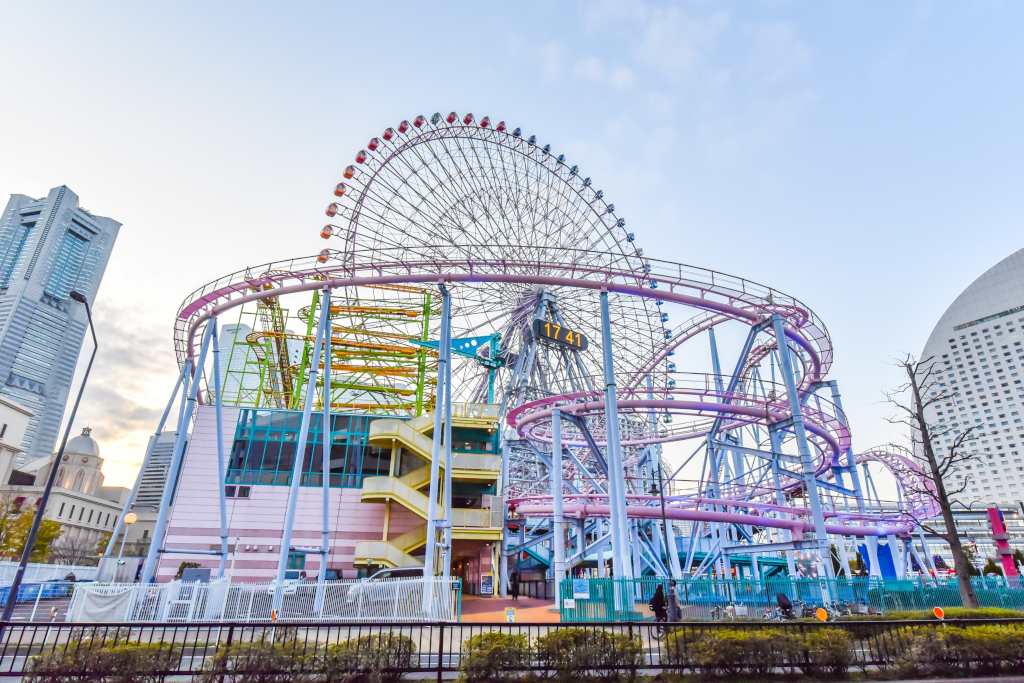
What to see in Minato Mirai 21
Sky Garden Observatory
At 273 meters high, the Landmark Tower's Sky Garden is one of the highest observatories in the country, where breathtaking views of the surrounding landscape leave everyone speechless.
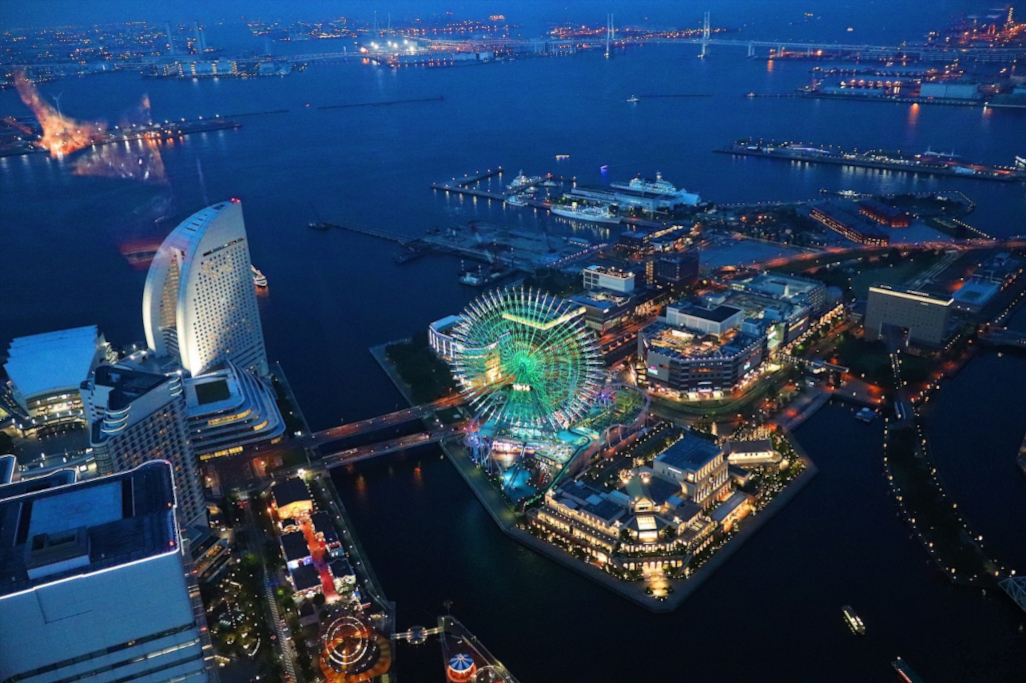
Cosmo World
Cosmo World amusement park has many rides for children and adults, as well as a large Ferris wheel that also displays the time. At night, the park is illuminated, blending in with the city's nighttime lights.
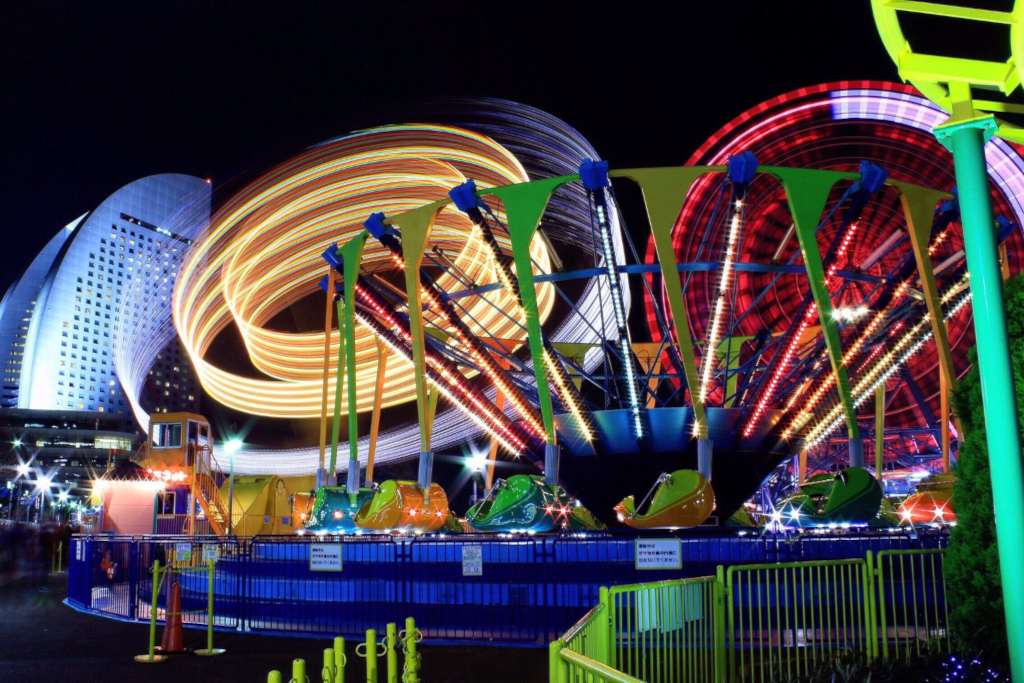
Club Manyo
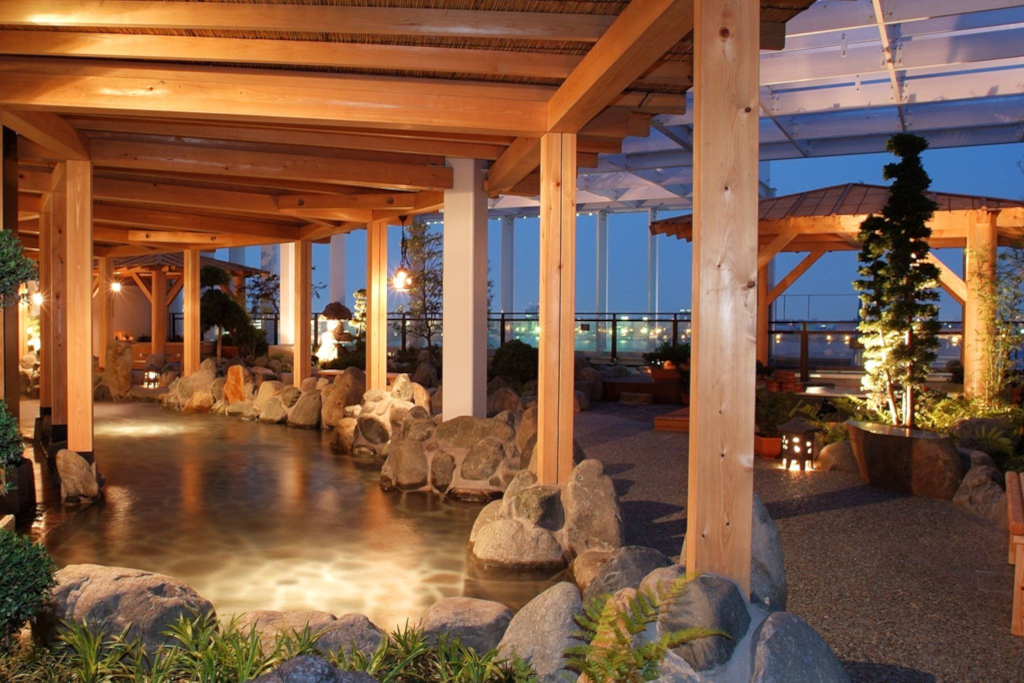
Club Manyo is a hot spring resort with hot spring baths where the water is brought directly from the Izu Peninsula.
Yokohama's airplane cabin
This approximately 600-meter-long cable car connects Sakuragicho Station with Unga Park near the World Porters shopping mall. Riding the cable car allows you to admire the cityscape from above, offering an interesting view.

Yokohama Airport cabin day view
Shopping and restaurants
Minato Mirai is the perfect place for shoppers, with Landmark Plaza and the Queen's Towers offering multiple floors of shops and restaurants. On Shinko Island, shopping is guaranteed at World Porters Mall and the Red Brick Warehouses.

World Porters Mall

Red Brick Warehouses
Queen's Square
Queen's Square is located at the foot of the three Queen's Towers. Shops, restaurants, and designer stores are a delight for shoppers.
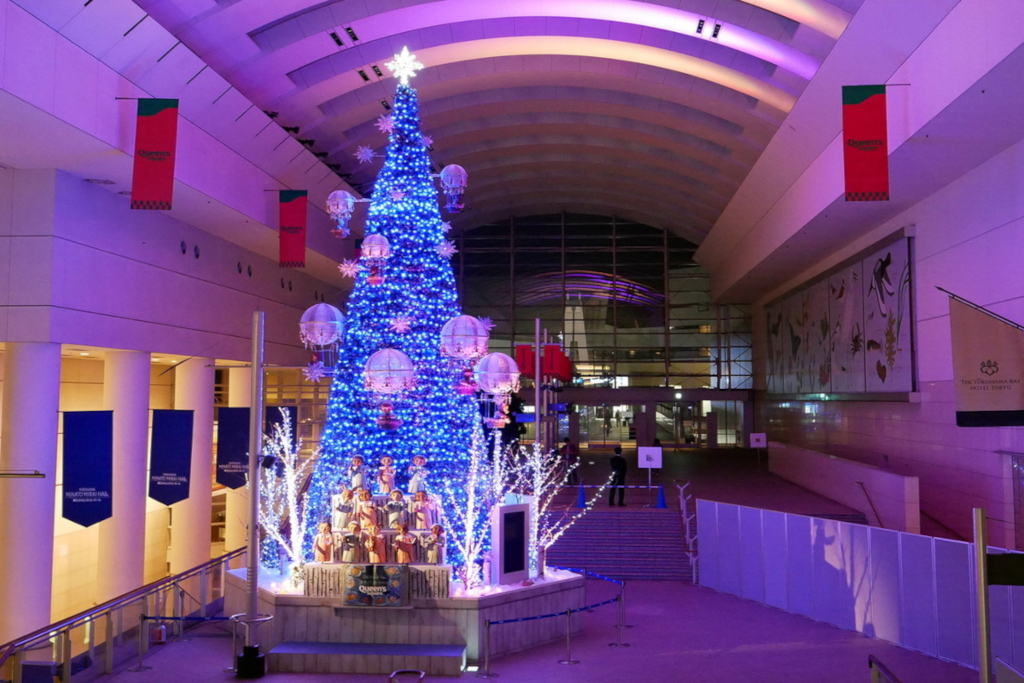
Landmark Plaza
The five floors of Landmark Plaza feature a variety of shops and restaurants similar to those found in the Queen's Towers, including a Pokemon Center.

Red brick warehouses
The red brick warehouses (Akarenga Soko) offer a unique shopping atmosphere, with shops, restaurants and spaces dedicated to events and exhibitions.
World Porters Mall
World Porters Mall has six floors, each dedicated to a different theme. From the ground floor onward, there are food, fashion, sports and hobbies, home and living, cinema and relaxation.
Yokohama Hammerhead
Yokohama Hammerhead is a cruise ship terminal, which contains an Intercontinental Hotel.

Marine & Walk Yokohama
Marine & Walk Yokohama is an open-air waterfront shopping mall featuring fashion boutiques and restaurants.

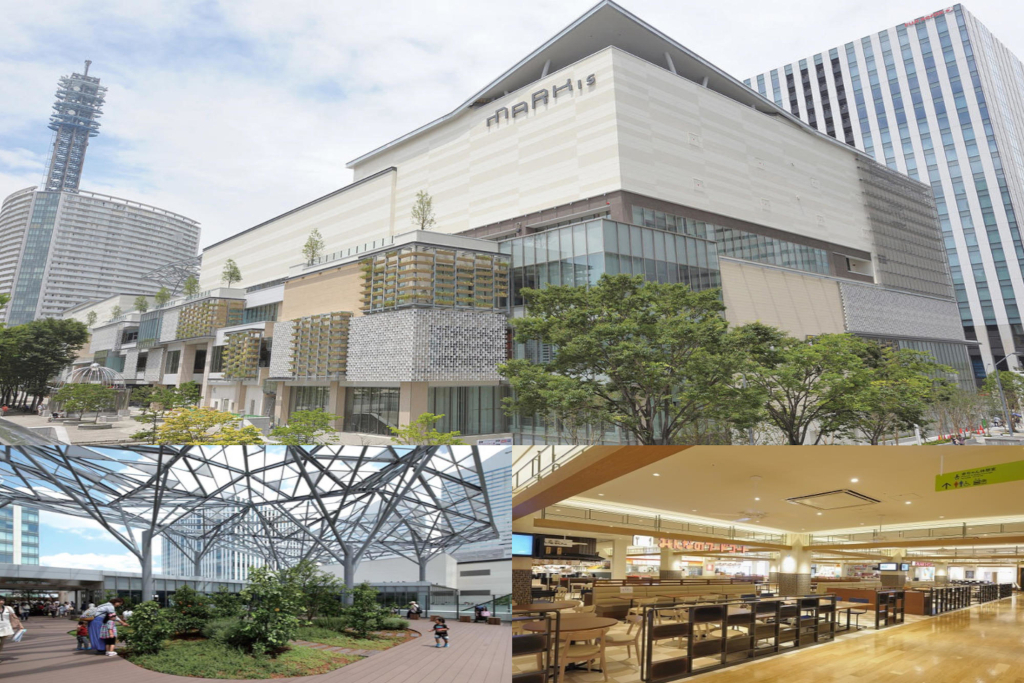
Mark is Minatomirai
Mark is Minatomirai is a large shopping mall offering a wide variety of shops and restaurants on eight floors.
Yokohama's museums
There are several museums to visit in Minato Mirai as well as galleries of navigation, industry and technology.
Nippon Maru and Yokohama Port Museum
Built in 1930, the Nippon Maru is a retired sailing vessel open to the public. The Yokohama Port Museum, dedicated to the history of the port and also providing maritime information, stands opposite the ship.

Museum of Tagliatelle in a Cup
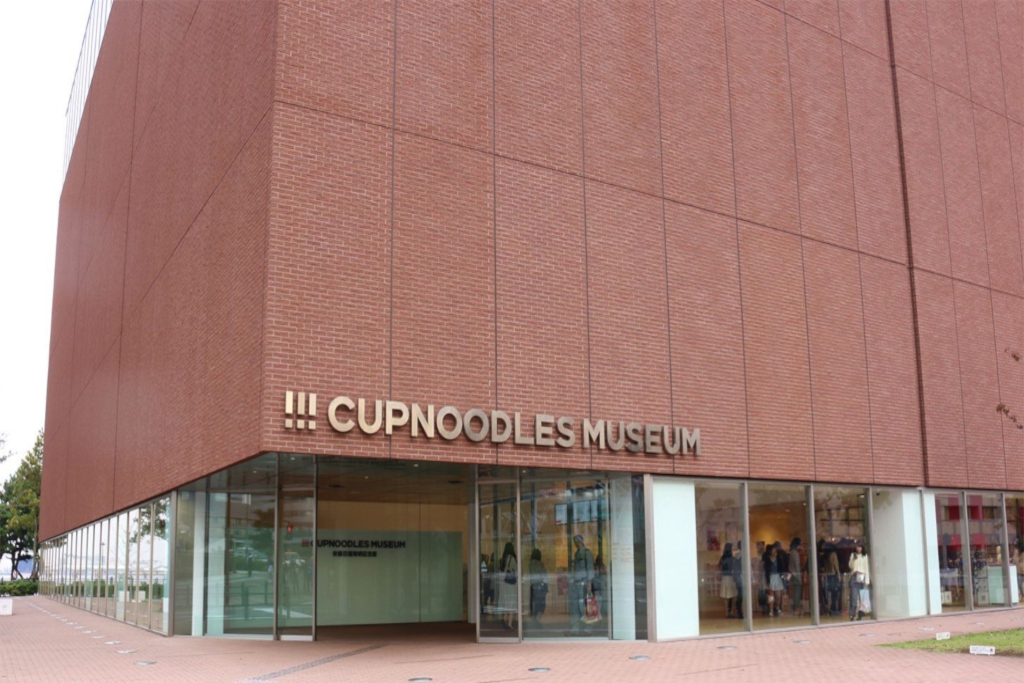
The Cup Noodles Museum (安藤百福発明記念館) is an engaging and interactive museum showcasing the history of instant ramen through a combination of exhibits and whimsical hands-on workshops. The museum also features a short video illustrating the history of instant noodles. A small collection of modern art is also on display, representing the evolution of Nissin's new products.
Yokohama Museum of Art
The museum has seven galleries: three for the permanent collection, one for photography, and three for special exhibitions. The museum's main focus is contemporary art, especially the city of Yokohama, its port, and its artists.

Mitsubishi Minatomirai Industrial Museum
The museum has six rooms: space, ocean, transportation, everyday life, and environmental and technological research. Each theme covered by the museum, with interactive workshops, highlights the past and future of the subject in question.

Yokohama Chinatown
Yokohama Chinatown (横浜中華街) is the largest Chinatown in Japan. Chinese shops and restaurants line the streets and alleys of Chinatown. The origins of this neighborhood can be traced back to the opening of the port to foreign trade, allowing numerous Chinese merchants to settle in Yokohama.
In 1873, Chinese residents built Kanteibyo, a brightly colored temple dedicated to the Chinese god of business and prosperity. What draws tourists and residents to Chinatown is Chinese cuisine, some of which have been Japaneseized.

Zoorasia
Zoorasia (ズーラシア) is a zoo established in 1999 and operating under the themes of "Symbiosis of Life" and "Harmony with Nature." The animals live in spacious enclosures that replicate their natural habitat. The zoo is divided into eight sections: Asian Rainforest, Subarctic Rainforest, Oceanic Grasslands, Central Asian Highlands, Japanese Countryside, Amazon Jungle, African Tropical Rainforest, and African Savannah.


Ramen Museum
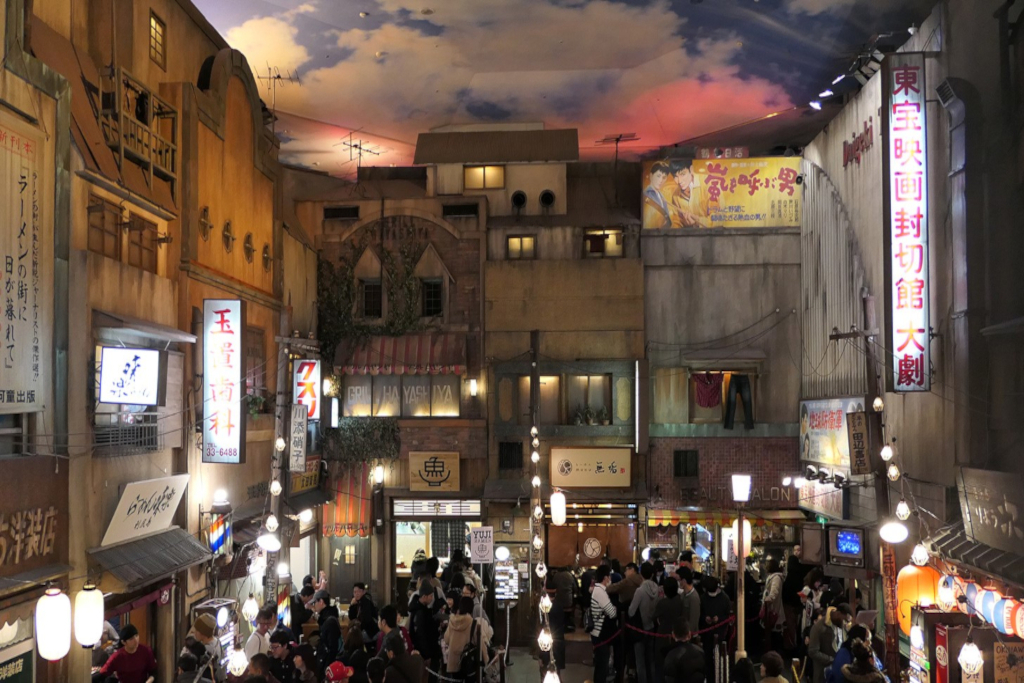
The Shin Yokohama Ramen Museum is a museum dedicated to ramen, a very popular Japanese noodle dish originating in China.
In a gallery on the first floor, the Ramen Museum tells the story of ramen noodles, including the huge success of instant ramen, various types of noodles, soups, and more. In the two basement levels, there's a scale model of Shitamachi from 1958, a time when ramen was booming in Japan. There are nine ramen restaurants here, each serving a ramen dish from a different region of Japan.
Yamate and Motomachi
For most of the Edo period, the rulers prohibited residents from engaging in foreign trade, but when the "closed" period ended, Yokohama was one of the few port cities where foreign traders could reside. Westerners settled in the hills of the Yamate area. This area preserves historic sites, such as the Westerners' residential district. However, due to the Great Kanto Earthquake, few ancient structures remain standing.
Yamate has several parks located within walking distance of each other. The largest is Harborview Park, named for its view of the water and the Yokohama Bay Bridge. This park features some of the area's preserved Western buildings, mostly former residences, furnished in their original style.

Below the Yamate Hills lies Motomachi shopping street, which runs along the Nakamura River. Motomachi isn't dramatically different from other shopping streets, but it still has a certain European feel. It boasts a large number of high-end fashion stores, as well as cafes and restaurants.

British house
This building, constructed in 1937, was the residence of the British Consul General. It features guest rooms and a dining room, as well as private quarters.

Parco Yamashita
Yamashita Park (山下公園) is a public park stretching nearly 800 meters along the Yokohama waterfront. The park was built after the Great Kanto Earthquake of 1923.
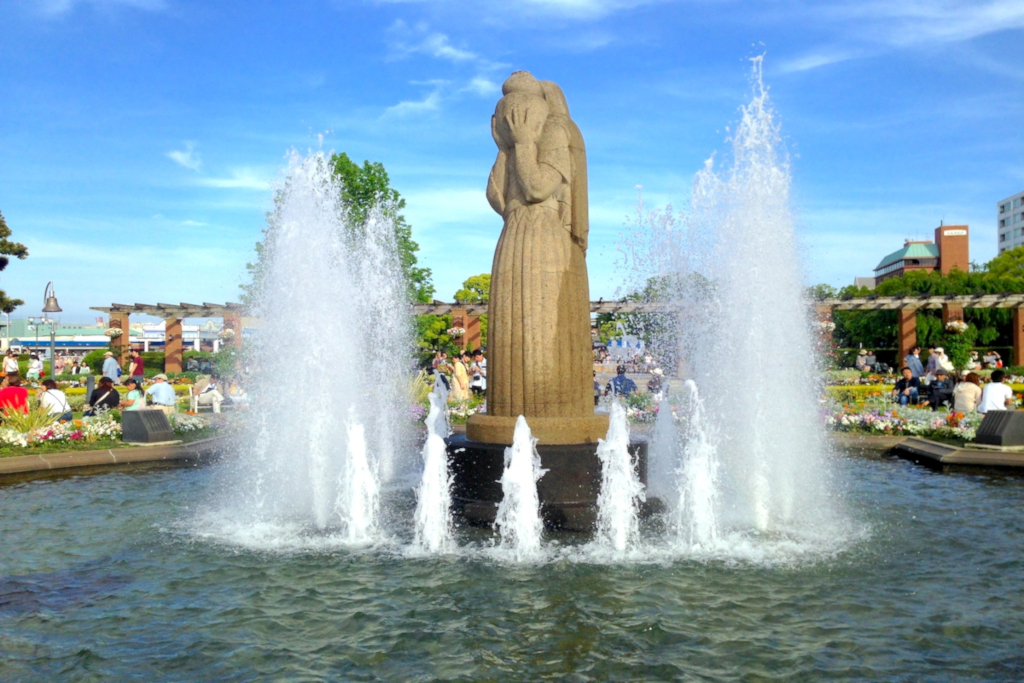

Strolling through Yamashita Park, you might not notice the giant ocean liner: the ship is called the Hikawa Maru. Like all ships, this one had first-class cabins that attracted high-class guests. It now serves as a museum, with informative exhibits and 1930s-style interiors.

Near the Hikawa Maru stands the Yokohama Marine Tower, with an observatory offering 360-degree views of the area.

One of the park's main features is a large, often crowded path that allows you to enjoy views of the bay and the ships, as well as a short walk to Minato Mirai.
Osanbashi Pier
The Osanbashi International Passenger Terminal (大さん橋国際客船ターミナル) is located between Minato Mirai and Yamashita Park. The pier features walkways and green spaces open to the public, making it an attractive area for travelers who aren't boarding a ship. Built in 1894 and renovated in 2002, it's one of the most popular spots for strolling and admiring the Minato Mirai skyline.

Hakkeijima Marine Paradise
Hakkeijima Sea Paradise (八景島シーパラダイス) is Japan's most visited amusement park and home to a very interesting aquarium. Another equally important attraction is the Aqua Resorts, which includes the Aqua Museum, Dolphin Fantasy, and the Furea Lagoon.
The Aqua Museum is an aquarium where visitors can see walruses, dolphins, sea lions, seals, polar bears, whale sharks, giant turtles, sea otters, and many other marine creatures.

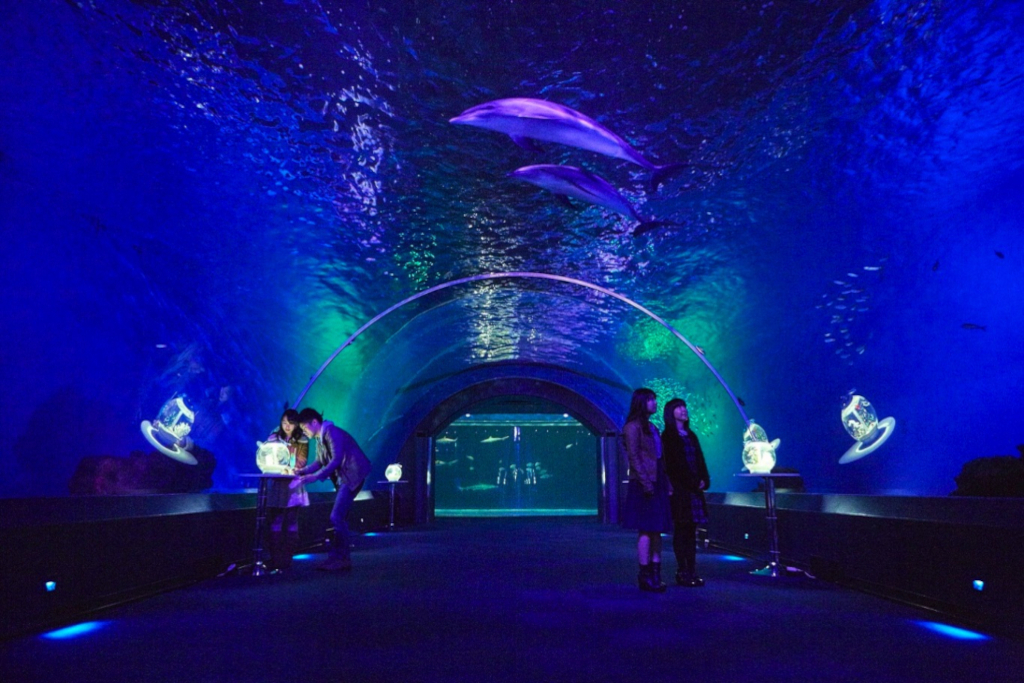
The Dolphin Fantasy, on the other hand, has a large arch-shaped pool surrounding a tunnel, where visitors can walk and watch dolphins and other fish swim in the pool around them.
Fureai Lagoon is another set of aquariums that allows visitors to interact and touch some of the marine animals.

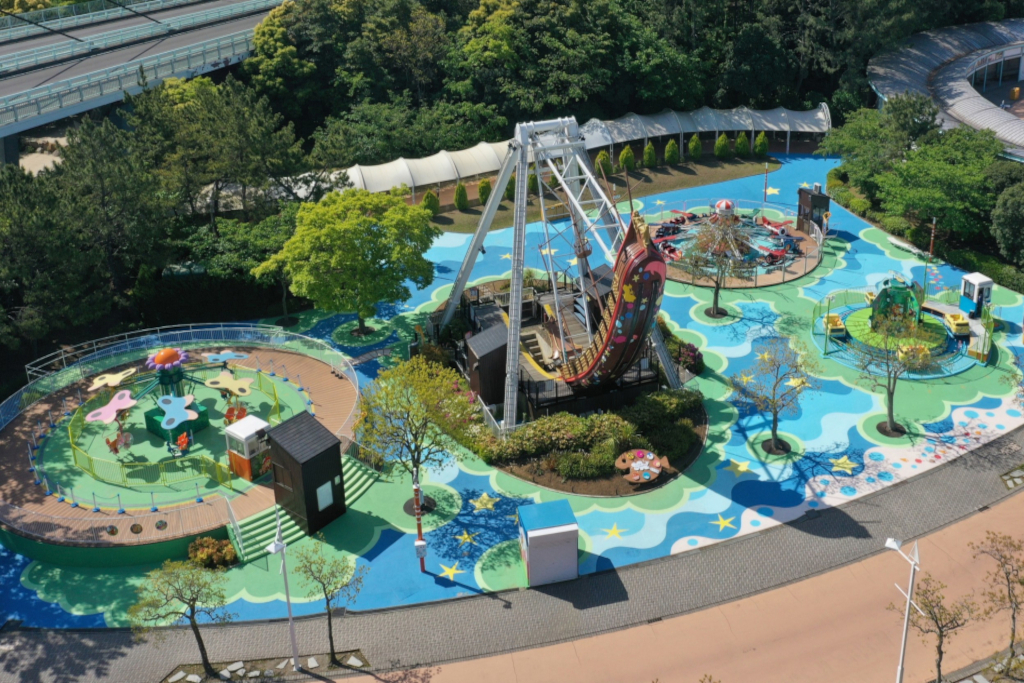
Last but not least, in the marine paradise of Hakkeijima is Pleasure Land, an amusement park for all ages.
Kirin Brewery
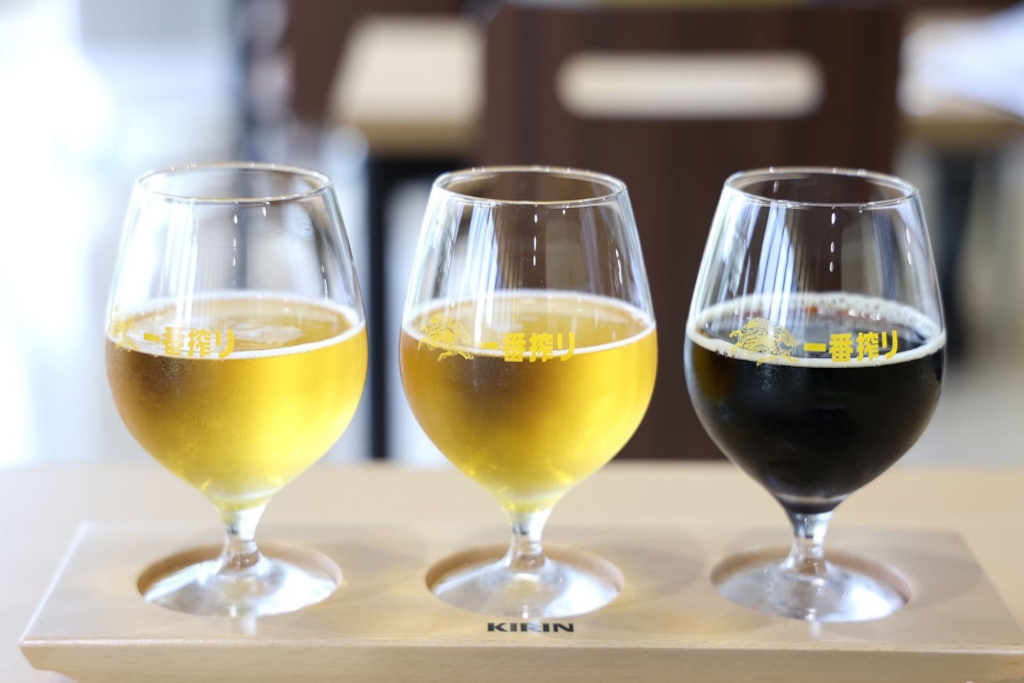
The Kirin Brewery Company, founded in Yokohama, played a major role in Japan's acquisition of beer from the West. The famous Japanese brewery offers tourists the opportunity to tour the brewery and participate in beer tastings.
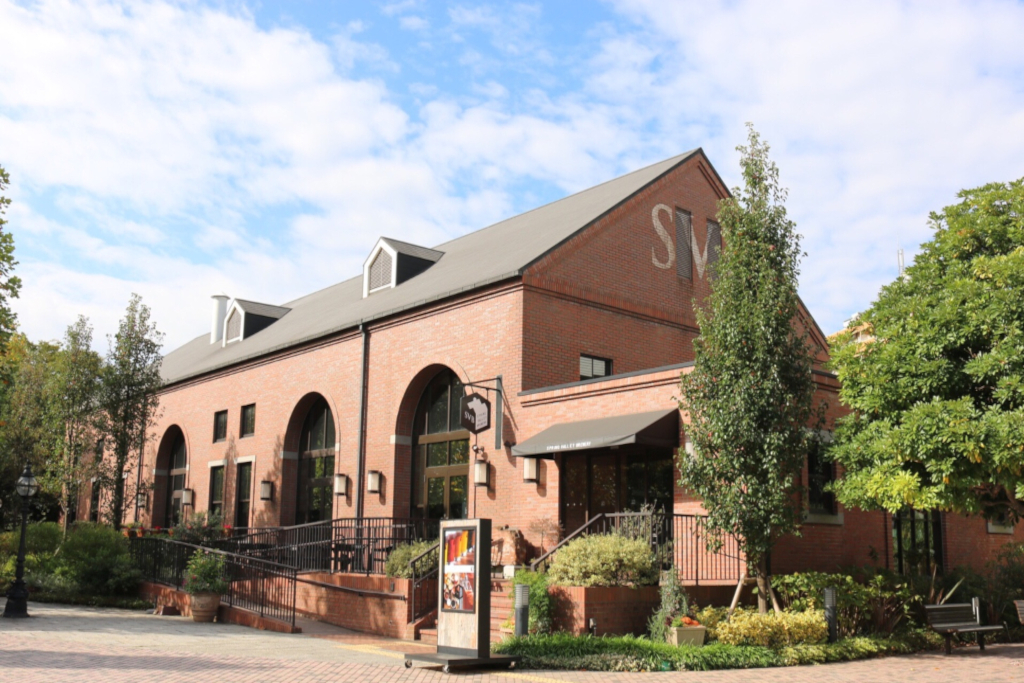
The history of Kirin is the history of beer in Japan. With Japan's opening to foreign trade, beer has become increasingly popular, especially in Yokohama.
How to get there
Just 30 minutes from Tokyo, it's easy to reach by train; in fact, it's included in the JR Rail Pass, the JR Tokyo Wide Pass, and the N'EX Round Trip Ticket.