Japanese furikake: flavour, preparation and tips
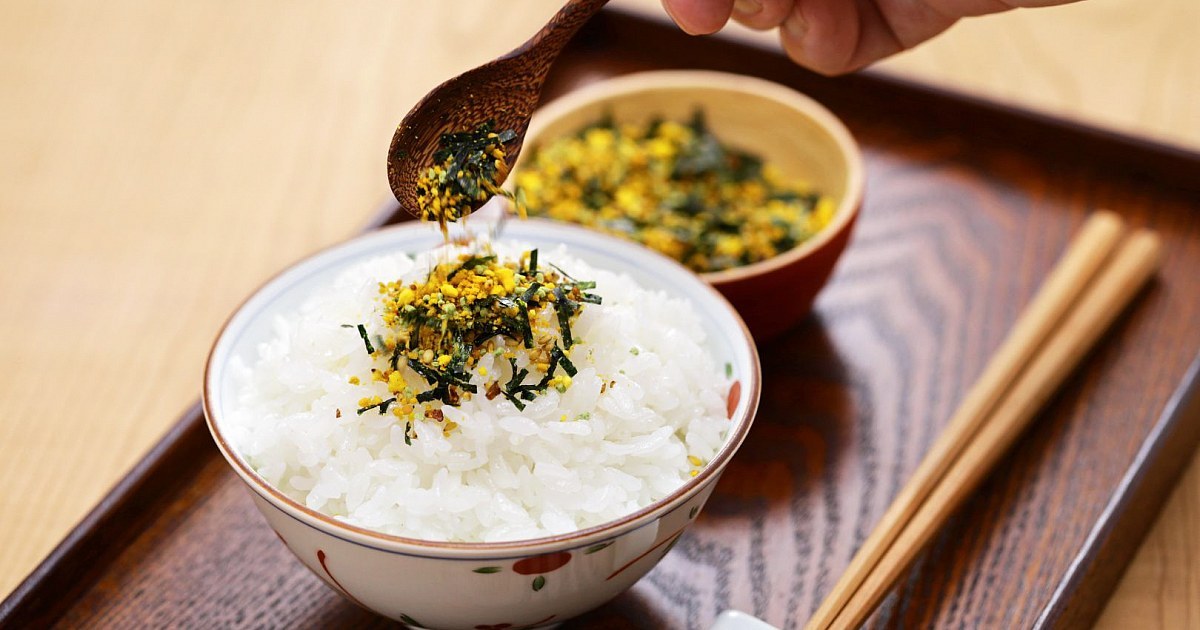
Furikake is a traditional Japanese seasoning that enhances simple dishes such as plain rice, imparting rich and varied flavours. Comprising a blend of dried ingredients, including seaweed, sesame seeds, dried fish and spices, furikake is frequently used in Japanese home cooking to add flavour and a crunchy texture. This product has also won over international palates, becoming a favourite amongst those seeking authenticity in Japanese cuisine.
Introduction and dietary context
Furikake is a traditional Japanese seasoning that enhances simple dishes such as plain rice, imparting rich and varied flavours. Comprising a blend of dried ingredients, including seaweed, sesame seeds, dried fish and spices, furikake is frequently used in Japanese home cooking to add flavour and a crunchy texture. This product has also won over international palates, becoming a favourite amongst those seeking authenticity in Japanese cuisine.
Its versatility means it can be paired not only with rice, but also with vegetables, soups and salads, making it easy to incorporate into a variety of dishes. Furthermore, storing it in airtight containers ensures it remains fresh and safe to eat – a key factor in preserving the flavour and quality of the ingredients. Anyone buying furikake should consider the available varieties, which differ in composition and flavour intensity, choosing the one best suited to their culinary preferences and dietary requirements.
In short, furikake is not just a simple seasoning, but a way of exploring Japanese culinary culture through taste, combining tradition and practicality in the kitchen.
Origin, history and spread
Furikake is a traditional Japanese seasoning, which originated in the early 20th century as a practical way to enhance the flavour of white rice, a staple of the Japanese diet. It was first developed in the 1920s, when a Japanese pharmacist sought to create a nutritious and flavourful mixture to sprinkle over rice, using readily available ingredients such as dried seaweed, sesame seeds and dried fish.
The word ‘furikake’ literally means ‘to sprinkle on top’, referring to how this mixture is used. Over time, this seasoning has evolved to include regional and seasonal variations that reflect the culinary diversity of different parts of Japan, whilst always aiming to enhance the main dish without overpowering its flavour.
Originally popular mainly in coastal regions, where seafood was readily available, furikake has since become widespread throughout the country and beyond, becoming a key ingredient in Japanese cuisine abroad as well. Its versatility and convenience make it an ideal accompaniment not only to rice, but also for adding flavour to soups, salads and snacks, contributing to its rapid spread around the world.
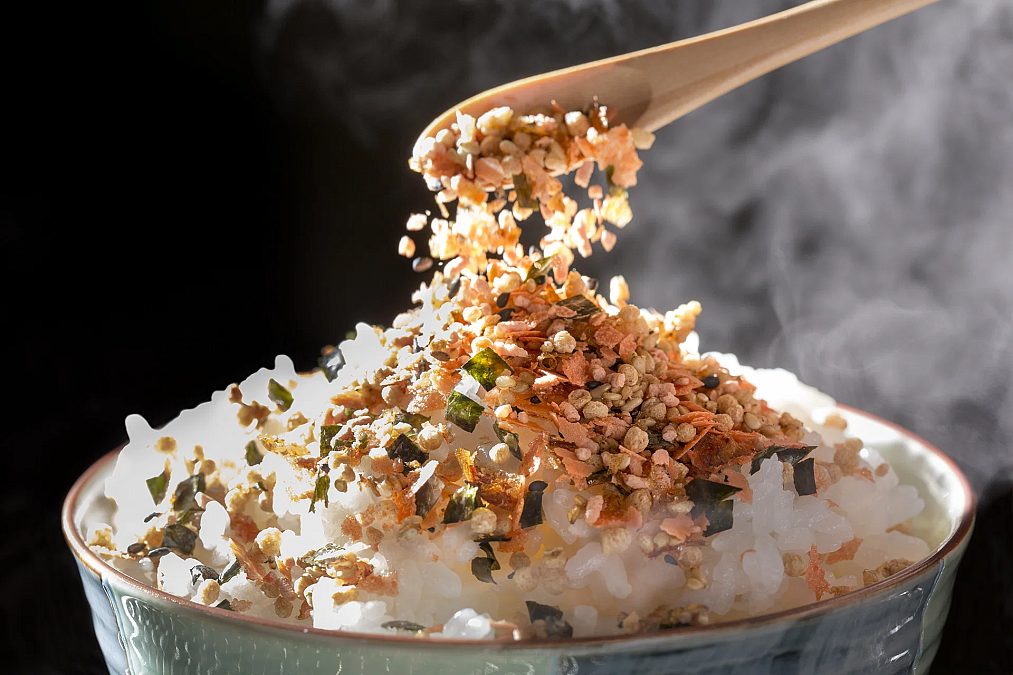
Today, in addition to traditional recipes, there are many variations of furikake that incorporate spices, dried vegetables or even sweet ingredients, adapting to contemporary tastes and different culinary combinations. This evolution demonstrates how furikake acts as a bridge between traditional culinary culture and new global food trends.
Ingredients, flavour and characteristics
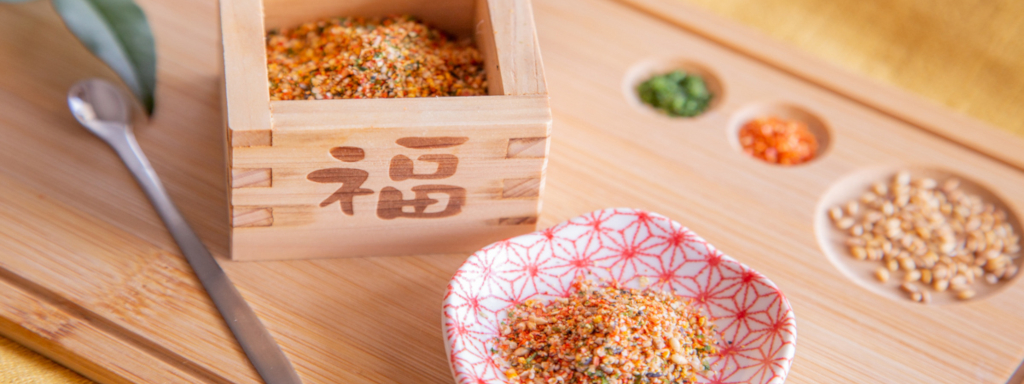
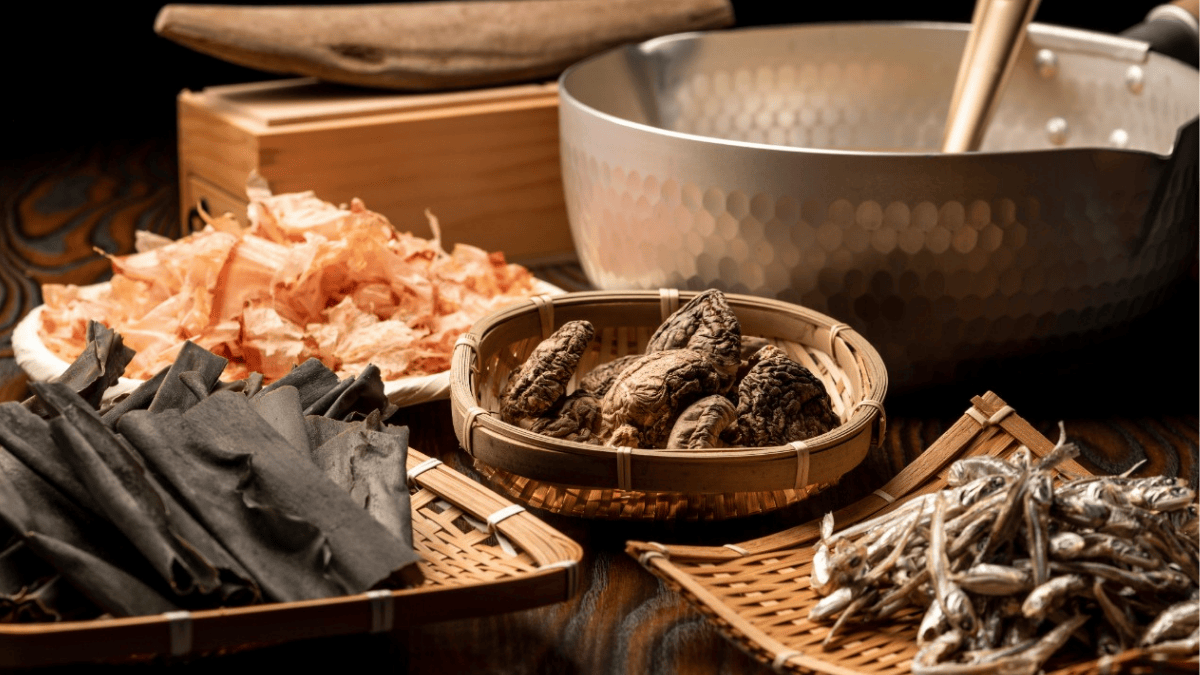
Furikake is a dry seasoning typical of Japanese cuisine, known for enhancing the flavour of rice, soups or salads with a crunchy, savoury mixture. The basic ingredients often include shredded nori seaweed, toasted sesame seeds and dried fish such as katsuobushi (fermented skipjack tuna flakes), which impart a rich and intense umami flavour. In addition to these key ingredients, it is also common to include additions such as sugar, salt and spices, which balance the sweetness, savouriness and spiciness of the mix.
In terms of flavour, furikake offers a combination of sea-like and slightly smoky notes, sometimes with a hint of sweetness, thanks to the inclusion of ingredients such as sugar or mirin in some varieties. Its texture tends to be grainy and slightly crunchy, providing a pleasant contrast to soft dishes such as boiled rice.
There are numerous varieties of furikake, which vary according to region and family tradition: some include dried eggs, different types of seaweed, or even small pieces of shiso (a Japanese herb), whilst others feature wasabi for a spicy kick. This variety means you can choose the type best suited to accompany a range of dishes, from plain white rice to more elaborate meals.
Compared to other Japanese dry seasonings such as gomashio, which is made mainly from sesame seeds and salt, furikake stands out for its wide variety of ingredients and its more complex, flavourful aromatic profile. Furthermore, the inclusion of marine ingredients such as seaweed and fish gives furikake interesting nutritional properties, including a good source of iodine and protein, making it not only a tasty addition but also a functional one.
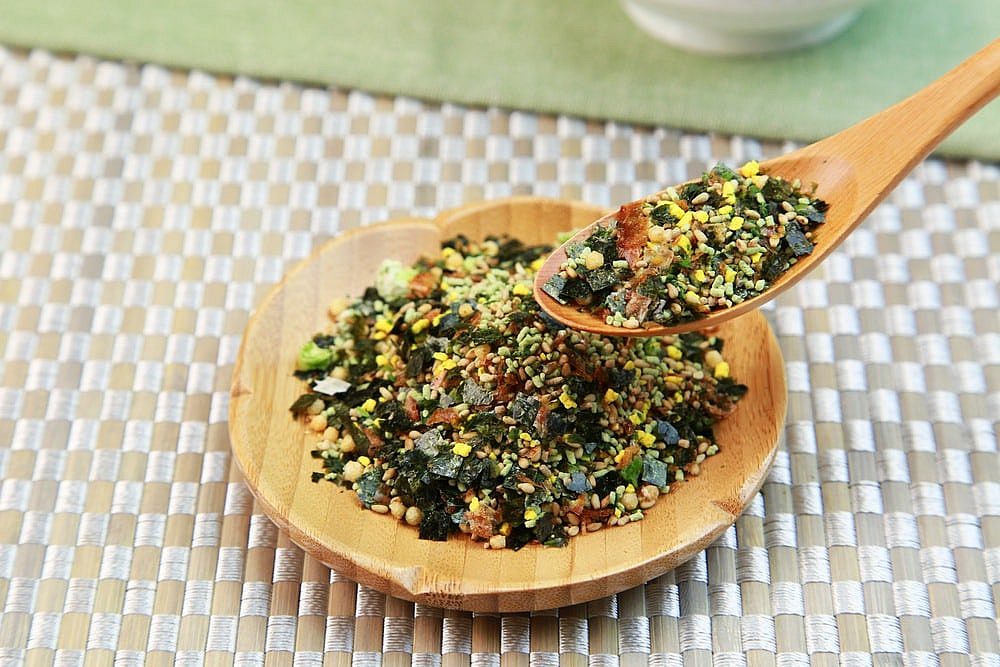
As for storage, furikake will keep for several months if stored in airtight containers in a cool, dry place, ensuring you always have a touch of traditional Japanese flavour to hand to enhance your everyday meals. When buying it, it is advisable to check the freshness of the ingredients and opt for products without artificial additives for a more authentic and healthy experience.
Culinary uses and pairings
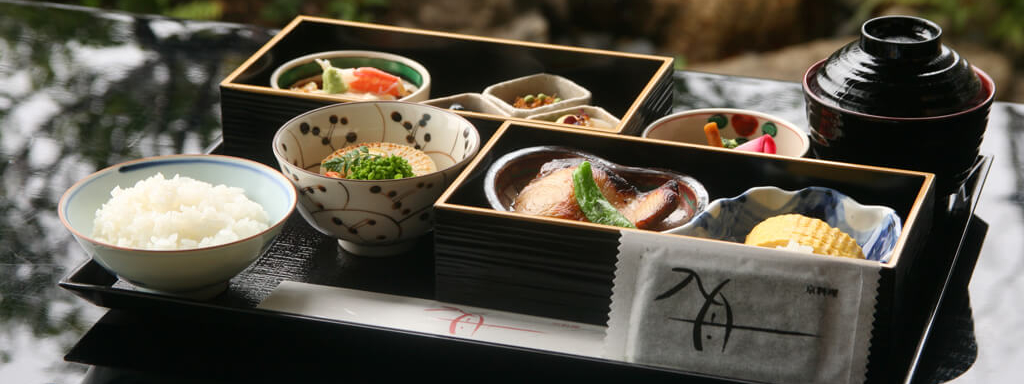
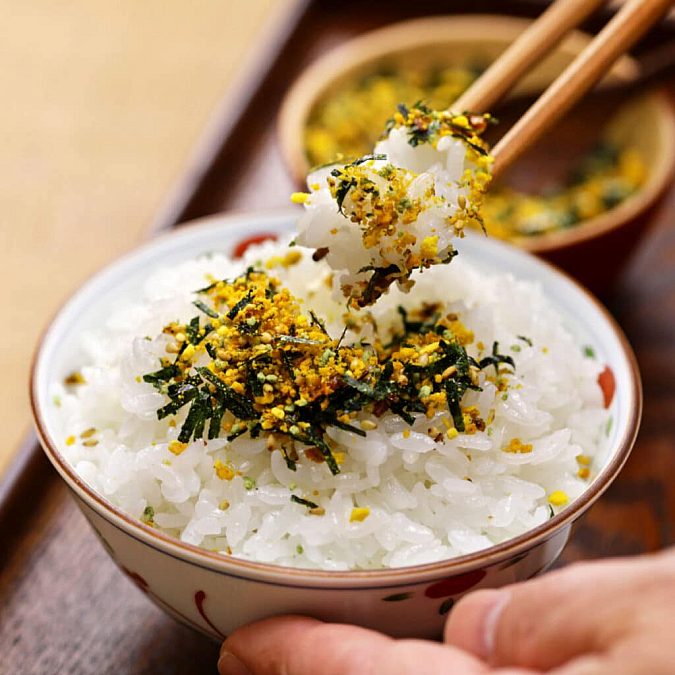
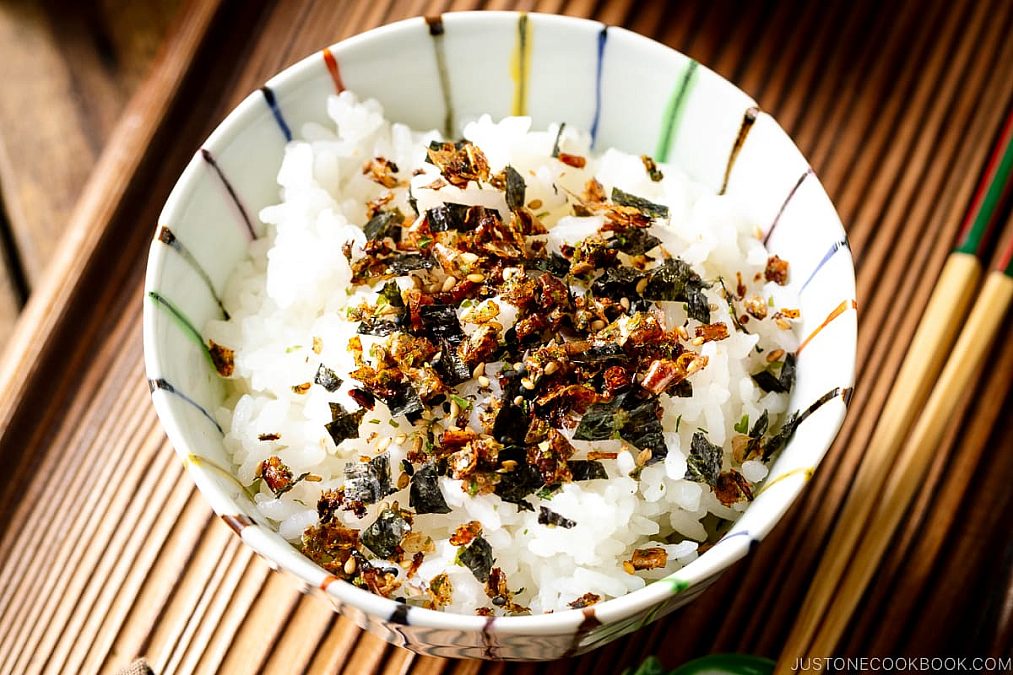
Furikake stands out as one of the most versatile seasonings in Japanese cuisine, capable of effortlessly enhancing a wide range of dishes, from simple to elaborate. Traditionally, it is most commonly used on steamed rice, where a light sprinkling adds an aromatic and savoury touch, perfect for bringing out the natural sweetness of the rice without overpowering it.
As well as rice, furikake can be used to flavour onigiri, making these classic triangular rice balls even more tasty and appetising. However, its use is not limited to traditional dishes: it is also ideal for garnishing salads made with raw or cooked vegetables, adding a crunchy texture and a contrast of flavours that enhance the dish.
When cooking, it is advisable to use furikake sparingly: generally, around 2–3 grams per portion is sufficient to provide the right balance of flavour and aroma, without overpowering the other flavours in the dish. Using too much could, in fact, make the dish too salty or too strong.
Some creative recipes also use furikake in scrambled eggs or omelettes, where the mixture of seaweed, sesame seeds and dried fish complements the soft texture of the eggs, creating a fascinating contrast of flavour and texture. It is also frequently used as a topping for miso soup or ramen, where it releases an additional aroma that enriches the complexity of the broth.
Finally, furikake can be a surprising ingredient when making homemade snacks or crackers: whether added to the dough or sprinkled on top before baking, it imparts an umami flavour that transforms a simple snack into a more profound culinary experience.
Preparation, storage and tips
Furikake is a versatile, ready-to-use blend designed to enhance dishes with a unique flavour. Before using it, it is important to shake the packet well to mix the ingredients evenly, thus ensuring a balanced blend of flavours in every portion. In the kitchen, furikake can be sprinkled directly onto freshly cooked white rice, but it is equally effective for adding flavour to grilled vegetables, soups or savoury snacks.
As for storage, it is essential to keep furikake in a cool, dry place away from light to preserve the fragrance and crispness of the dried ingredients. Once opened, it is advisable to reseal the packet carefully or transfer the contents to an airtight container to prevent moisture from entering, as this could compromise the quality of the product. When stored correctly, furikake retains its flavour and texture for several months.
One of the most common mistakes when using furikake is adding it too early in the cooking process, which can cause it to lose its aromatic notes and grainy texture. It is best to add it at the end of cooking or directly to the hot dish to bring out its flavour. Furthermore, given that it contains seaweed and toasted seeds, it is advisable to check its freshness to avoid any deterioration caused by the natural fats going rancid.
For those who love to experiment, furikake lends itself to surprising combinations: it can be mixed into breadcrumb coatings for meat or fish, or sprinkled over salads and avocado toast for an original Japanese twist. When making homemade sushi, it’s a great way to add flavour without using large amounts of salt, thanks to the umami of its ingredients.
How to choose the right product
When it comes to choosing the furikake that best suits your needs, it is important to consider various factors that affect both the quality and the intended use of the product. First and foremost, the packaging plays a crucial role: furikake is often available in single-serving sachets, jars or larger packs. For those trying this seasoning for the first time, a small pack allows you to experiment with different flavours without wasting any, whilst larger packs are ideal for regular use in the kitchen.
Reading the label is essential for understanding the main ingredients and where they come from. Traditional furikake consists of seaweed, toasted sesame seeds, dried fish, salt and sugar, but many varieties may include ingredients such as hard-boiled eggs or dried vegetables, which alter the flavour and texture. Checking that there are no artificial additives or preservatives can be an indicator of quality, especially for those who prefer a natural diet.
Furthermore, choosing based on the intended use helps you select the most suitable variety: some versions are milder and go well with white rice or simple dishes, whilst others are more flavourful and are ideal for adding flavour to salads or snacks. Taking into account the level of saltiness and the presence of spicy ingredients can help avoid any unpleasant surprises in the kitchen. For those wishing to use furikake in specific recipes, such as sushi or soups, opting for specialised products can improve the final result.
Finally, assessing the price in relation to the quality and quantity on offer is an integral part of making an informed choice. Artisanal furikake, or that imported directly from Japan, may cost more, a price justified by carefully selected ingredients and traditional production methods, whilst mass-produced versions are cheaper but may contain additives. An informed purchase allows you to balance quality and cost according to your culinary needs.
Frequently Asked Questions
What does furikake taste like, and how can it enhance everyday dishes?
Furikake offers a balance between savoury flavours and intense umami, often with hints of seaweed, toasted seeds and delicate spices. This combination makes it ideal for adding an extra touch to simple dishes such as plain rice or salads, imparting depth of flavour without being overpowering.
How should furikake be stored to preserve its freshness and flavour?
It is essential to store furikake in an airtight container, away from direct light and sources of heat. Storing it in a cool, dry place prevents moisture from building up, which could affect the crispness and aroma of the ingredients.
What are the most common culinary combinations for using furikake?
As well as being a classic topping for rice, furikake goes well with scrambled eggs, miso soups or as a topping on avocado toast. It can also be mixed into bread dough or meatball mixtures to add a distinctive flavour and a touch of crunch.
Is it suitable for a vegetarian or vegan diet?
Many varieties of furikake contain ingredients of animal origin, such as dried fish or egg powder. However, there are blends specially formulated for vegetarians and vegans that are free from animal-derived ingredients, so it is worth checking the label or buying certified products to avoid any unpleasant surprises.
Where is the best place to buy furikake, and what should you bear in mind before buying it?
Furikake can be found in shops specialising in Asian products or online. Before buying, it is advisable to check the ingredients and use-by date, opting for blends with few additives and a certified origin to ensure quality and food safety.
How can furikake be incorporated into international cuisine without losing its authenticity?
To preserve the distinctive character of furikake, it is best to use it in recipes that showcase fresh, simple ingredients. For example, a sprinkling over grilled vegetable salads or steamed fish can enhance the flavours without overpowering them, creating a culinary bridge between different cultures.
Prodotti citati nell’articolo
Una selezione Domechan collegata a questa guida.


